The Bible reader in Tutor
Read the text. Keep what you find.
Reading Scripture in Greek and Hebrew is the reason to learn them. Tutor's Bible reader puts the text in front of you from Level 2, with a gloss under each word you haven't learned yet. Then it gives you a place to keep every note, translation and word study you make along the way.
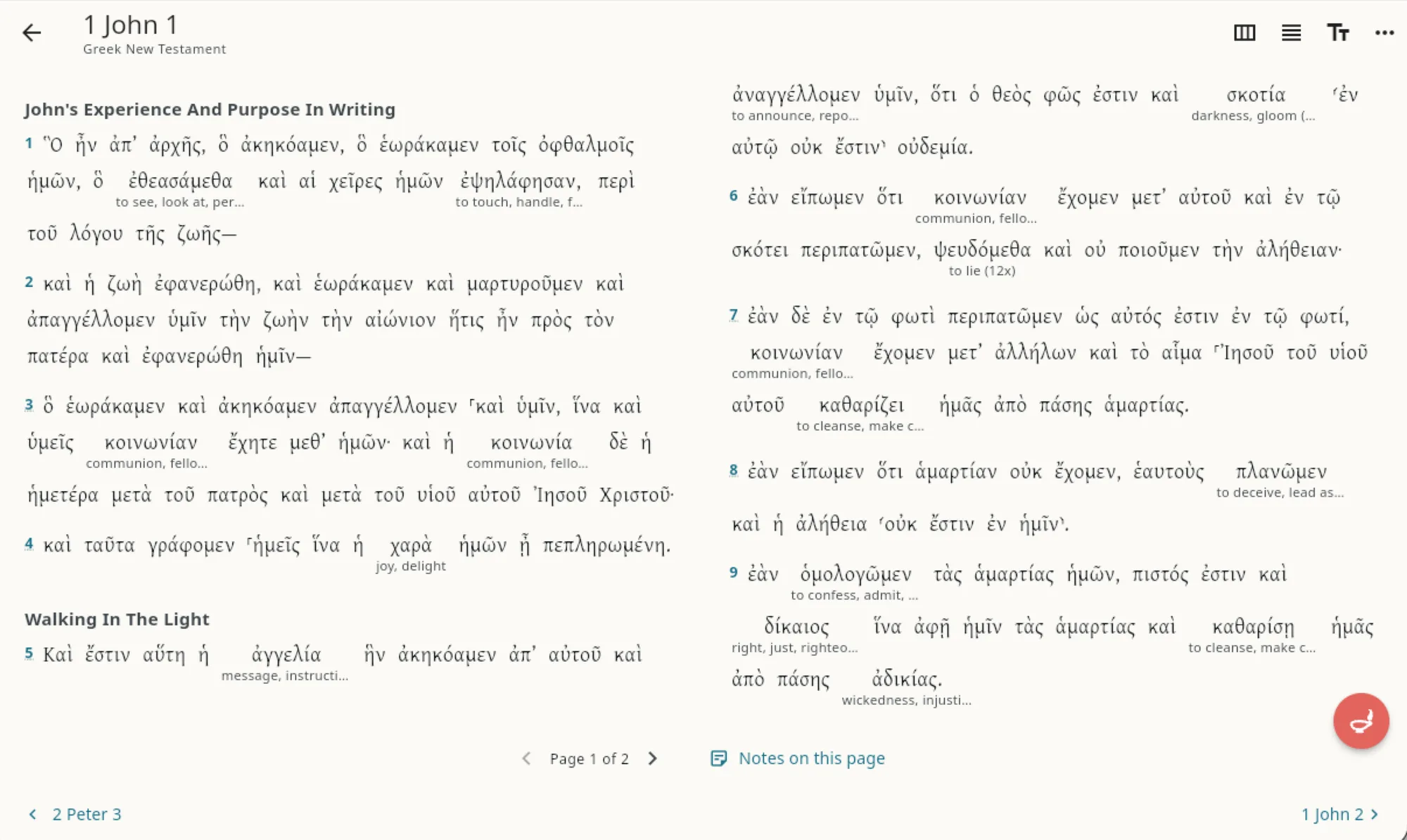
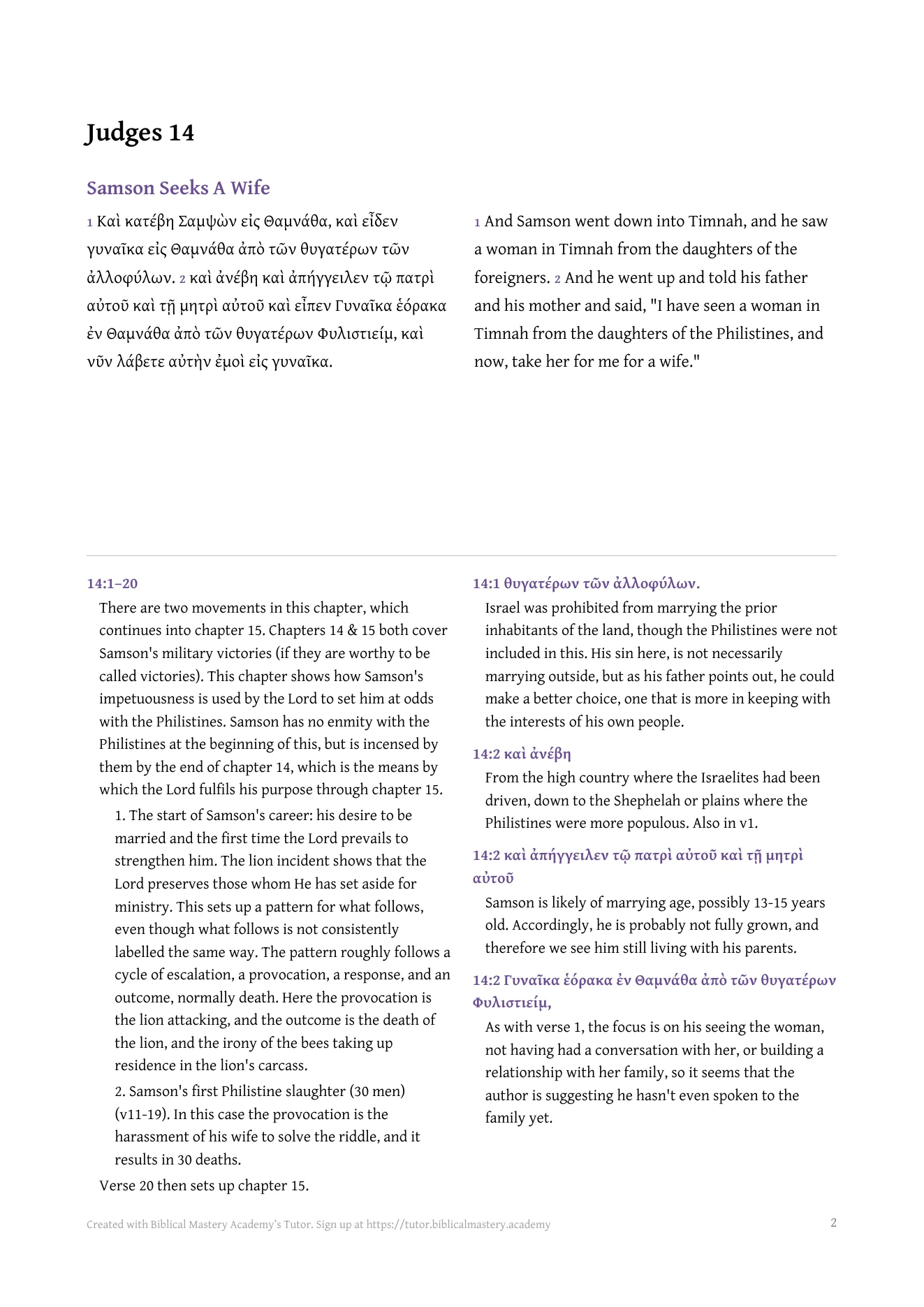
A reader's edition made for you
Tutor knows which words you have learned. So the reader puts a gloss under each word you haven't learned yet and leaves the rest alone. As your vocabulary grows, the glosses fall away by themselves, and the page carries more Greek and less help. That is the point.
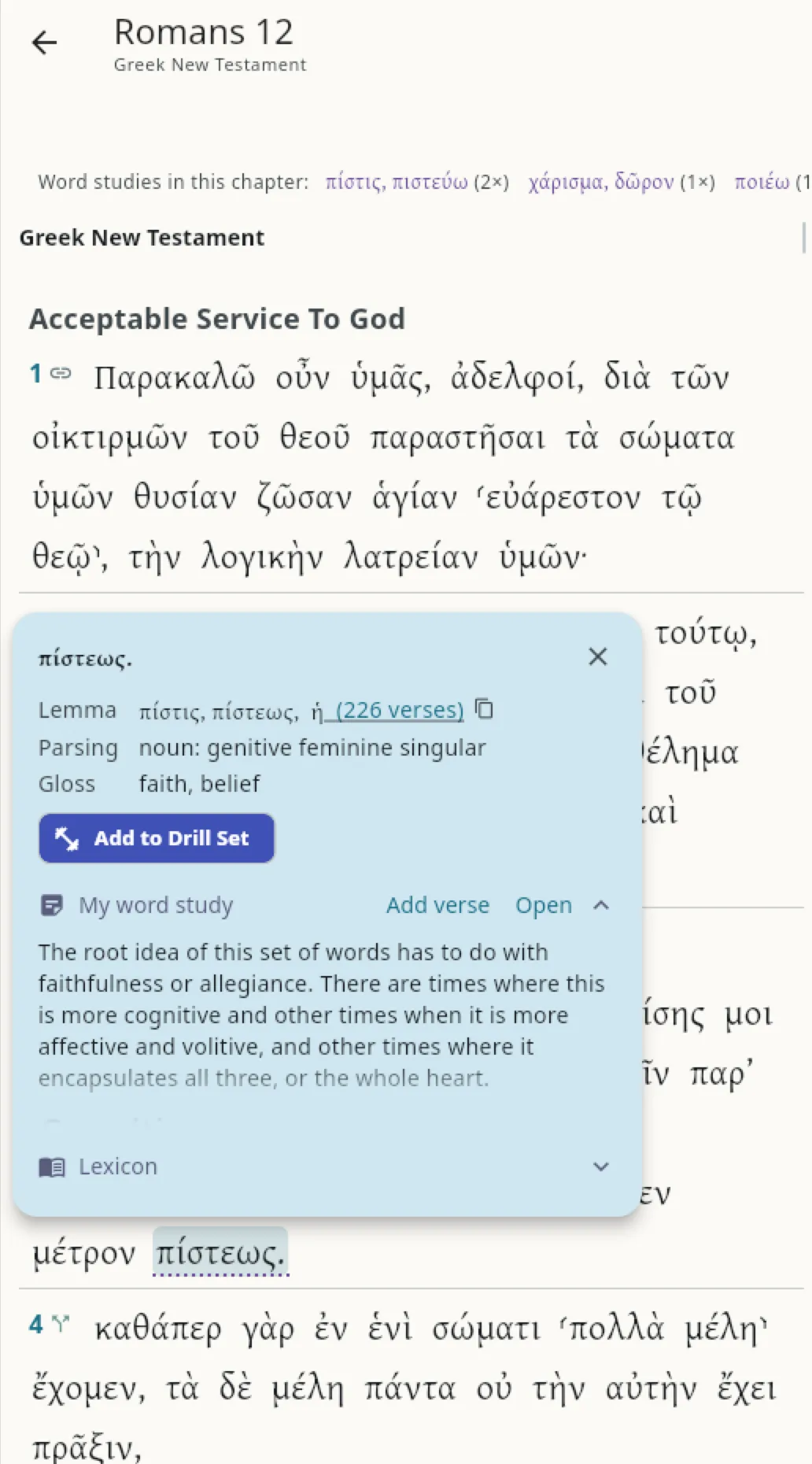
Tap any word for its word card: the lexical form, the parsing, the gloss, how often it occurs, every verse it appears in, and its entry in Abbott-Smith's lexicon. Meet a word your lessons won't reach for months? Add it to your review from the card, or add a whole chapter's new words before you start reading.
The Greek New Testament in Tutor is the SBL Greek New Testament. Where it differs from Westcott and Hort, NA28 or Robinson and Pierpont, a small mark beside the verse number tells you, and a tap shows each reading and which editions have it.
Four texts in one reader
The texts you read depend on your plan. Greek Tutor and every Greek membership include the Greek New Testament, the Septuagint and the Apostolic Fathers. The Hebrew Mastery Membership includes the Hebrew Bible. Premium Languages includes all four.
-
The Greek New Testament
Every book is open from Level 2. The success path still suggests the order.
-
The Septuagint
The Greek Old Testament, the Scriptures the apostles knew and often quoted.
-
The Apostolic Fathers
The earliest Christian writings after the New Testament, from the Didache on.
-
The Hebrew Bible
Glossed the same way, read right to left, with headings for every passage.
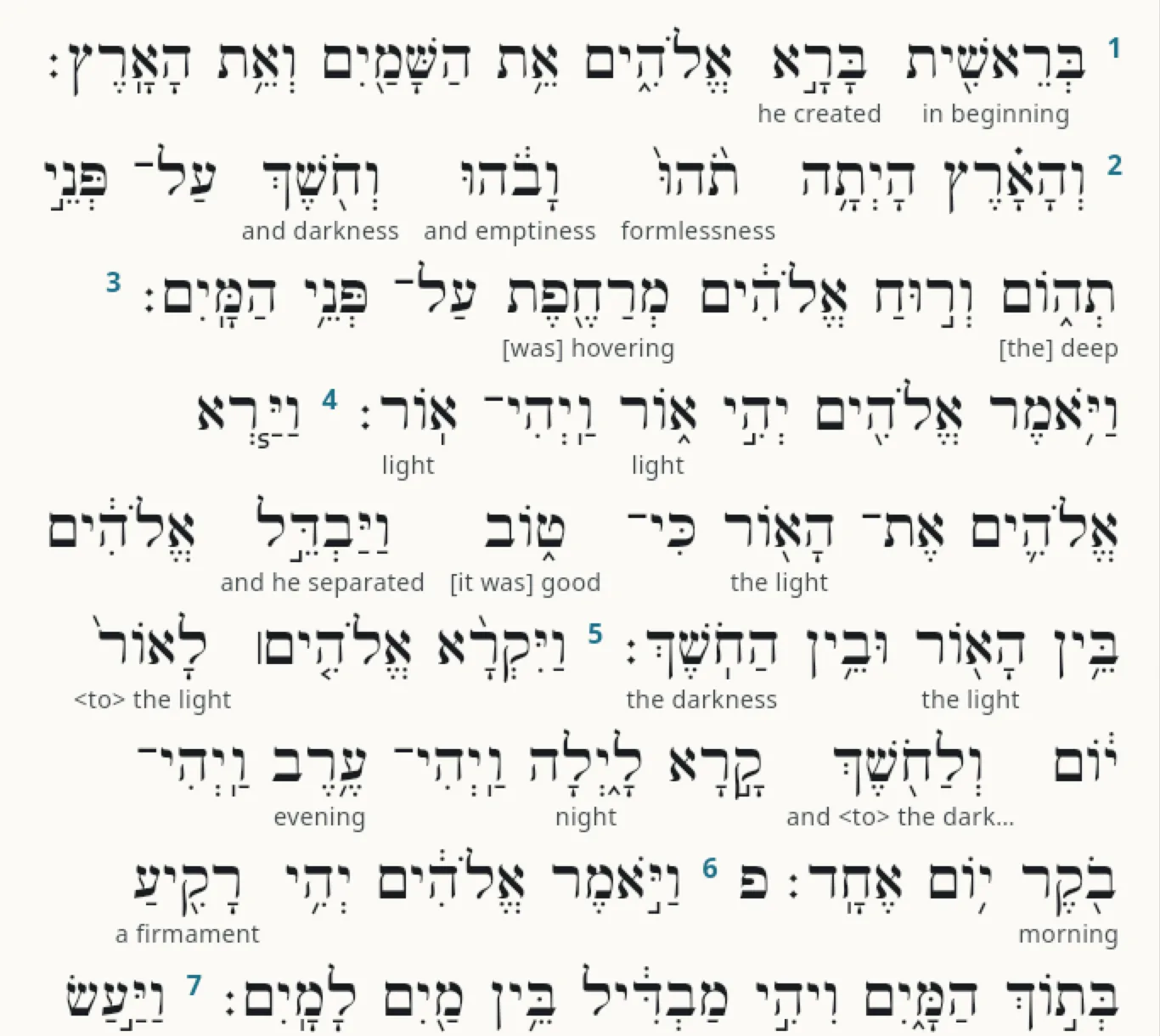
The Hebrew Bible, from Level 2
Hebrew Mastery and Premium members read the whole Hebrew Bible in Tutor. It is the same reader's edition: a gloss under each word you haven't learned yet, falling away as your Hebrew vocabulary grows, so the Old Testament is part of your study long before the grammar is finished.
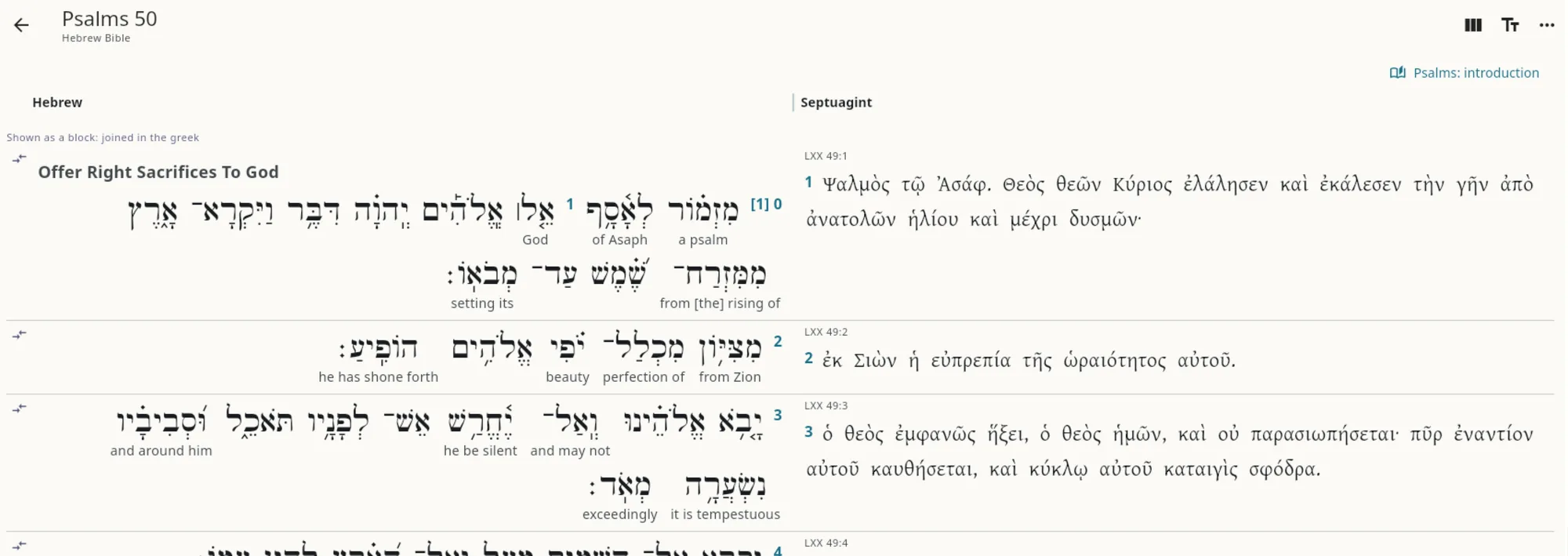
The Hebrew and the Septuagint, side by side
Premium Languages members can read the Hebrew with the Septuagint beside it. Tutor keeps the two in step verse by verse, even in the Psalms, where their numbering parts company, and a note you write on one shows on the matching verse of the other.
Your own translation, verse by verse
Translating a passage yourself is the quickest way to find out what you understood and what you skipped over. Write your translation beside the text, one verse at a time, with translator's footnotes for the places where English cannot carry everything the Greek or Hebrew does. Members who translate the daily verse in the community can add that translation to their own with a tap.
Premium Languages members can ask the Grammar Assistant to check a verse or a whole section. It compares your translation with the original, points out real mistakes with a link to the grammar behind each one, notes what you did well, and leaves your style alone.
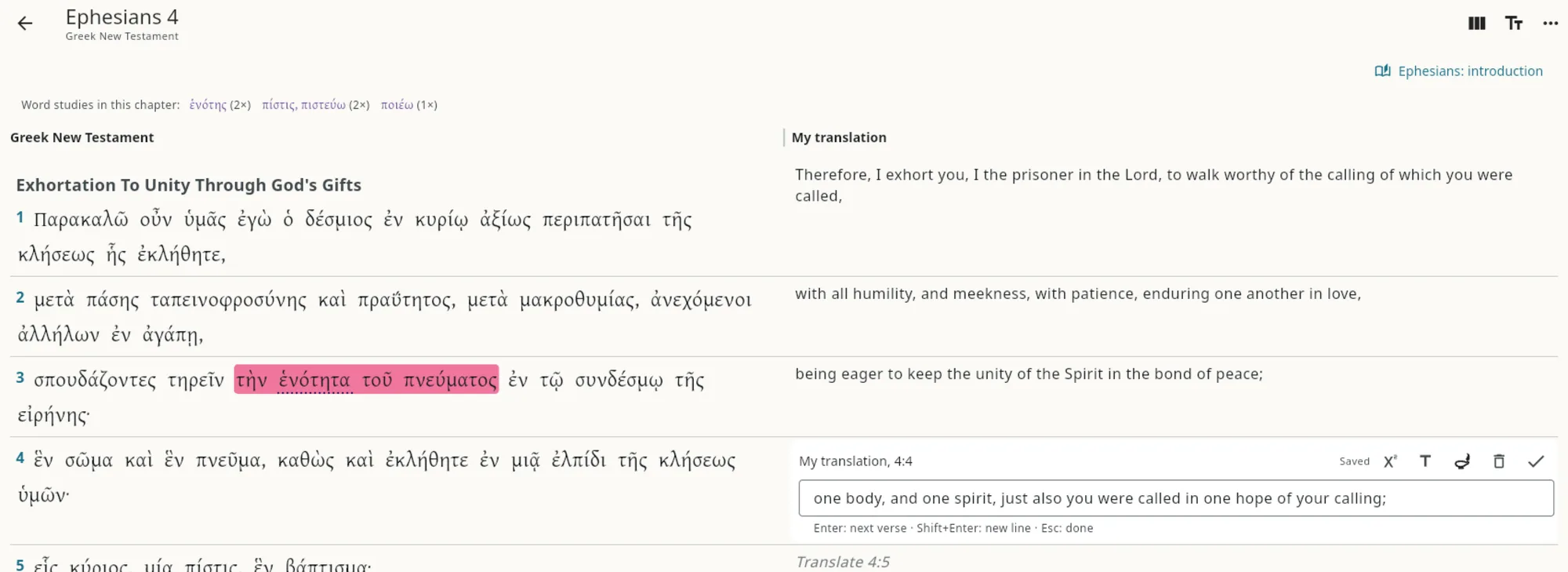
A study Bible built from your own reading
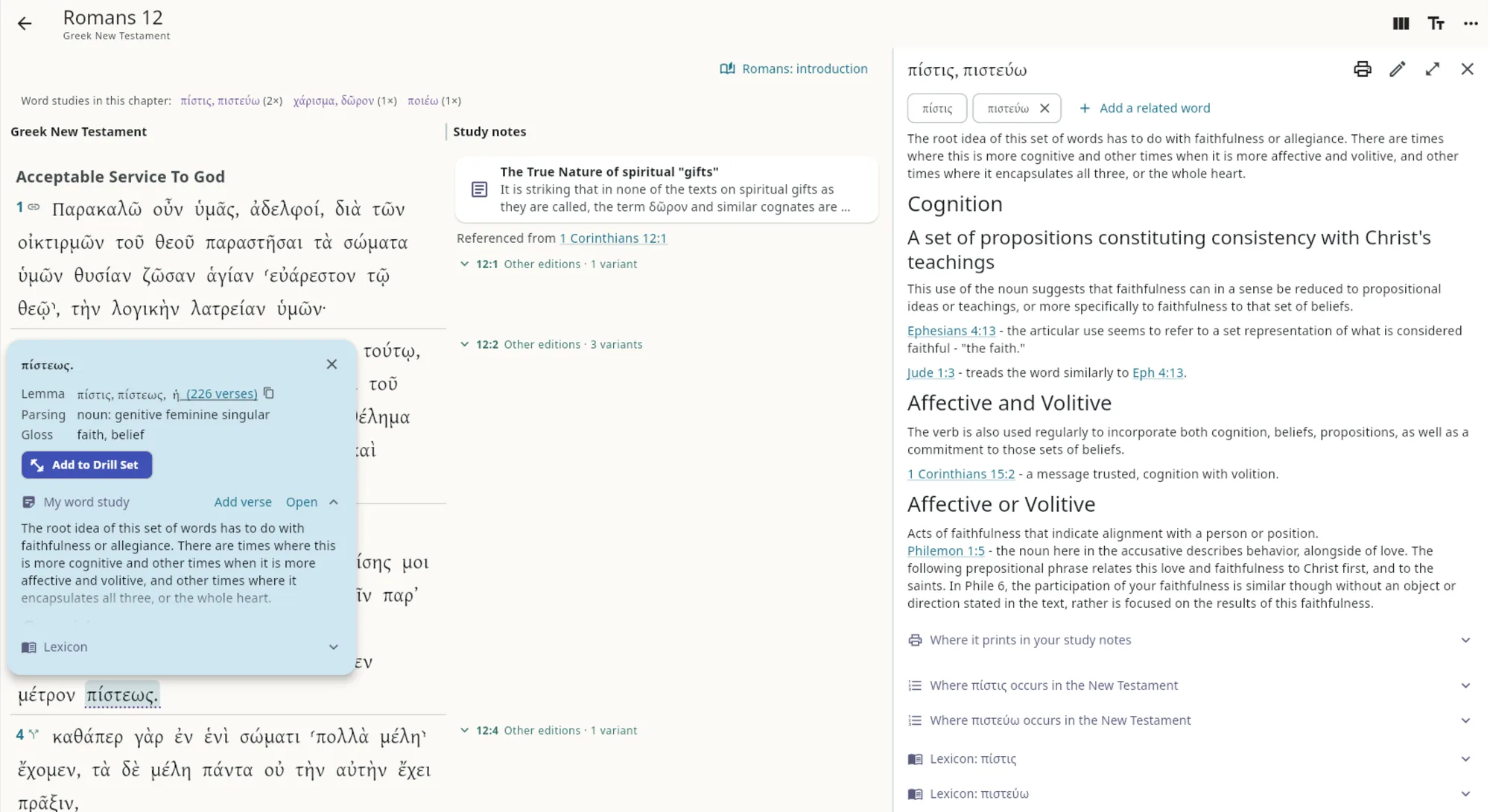
Every serious student of Scripture keeps notes somewhere. In Tutor they live beside the text they belong to. Write a note on a word, a phrase, a verse or a passage. Add section headings, cross-references, a book introduction and an outline. Everything you write is kept in My Study Bible, searchable and on every device you use.
Word studies are where it grows most. Write once about a word, and your study appears wherever that word occurs, across the New Testament, the Septuagint and the Apostolic Fathers, with its New Testament occurrences listed and the lexicon entry beside it. Related words such as πίστις and πιστεύω can share one study. Each time you meet the word again, you add the verse and what you noticed there.
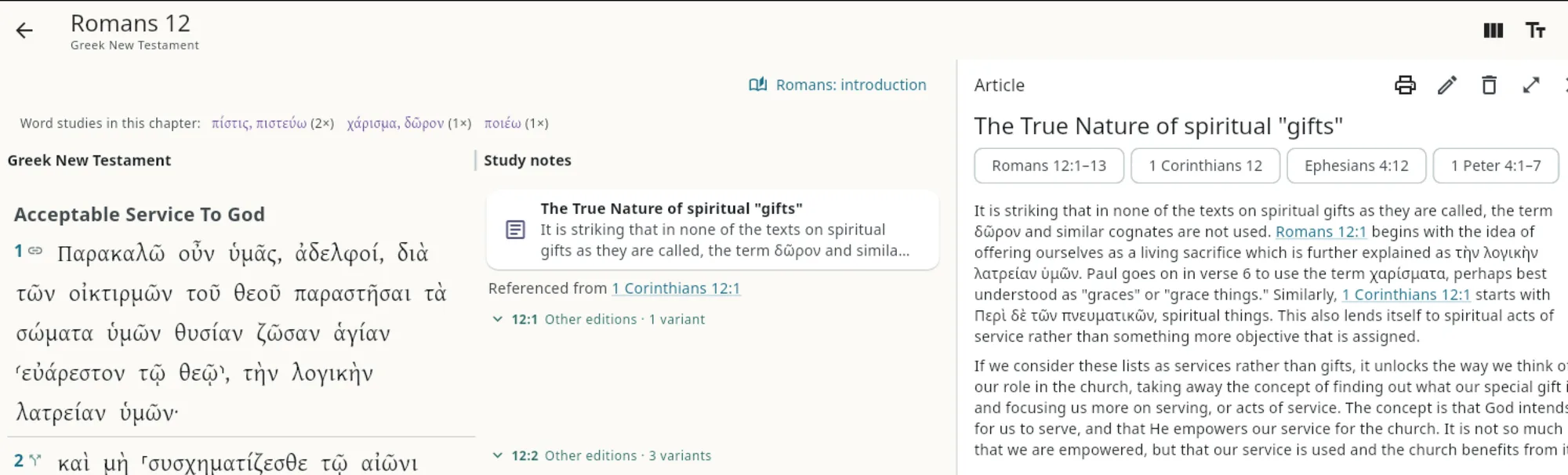
Articles are for the themes that run across several passages. Write one on spiritual gifts, place it at Romans 12, 1 Corinthians 12, Ephesians 4 and 1 Peter 4, and it is waiting at each of them when you return.
None of this is built in a week. Read a chapter at a time, observe carefully what the text says and how its words are used, and write it down. A year from now you will have a study Bible made from your own work in the text, and you will know why every note in it is there.
Take it with you on paper
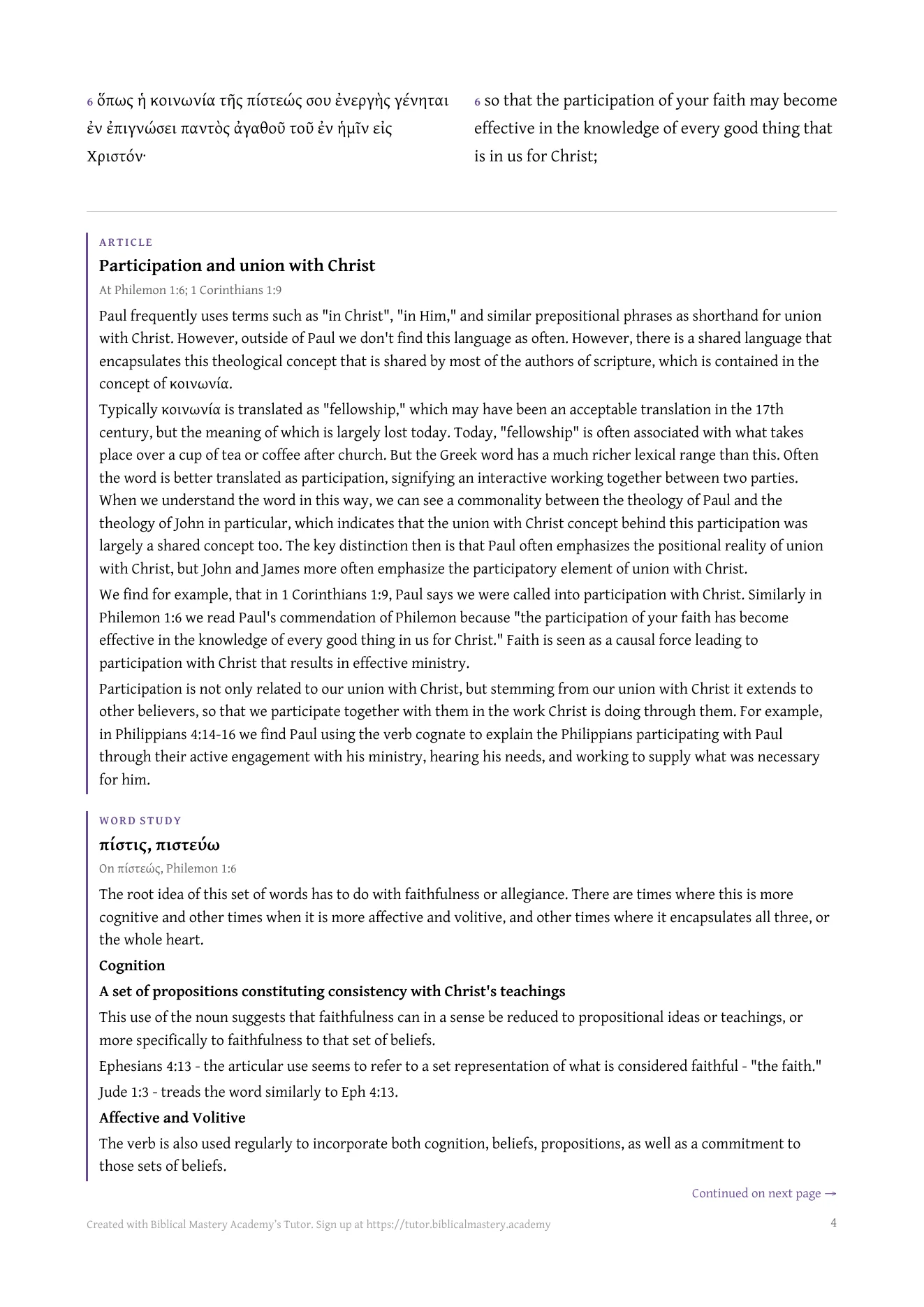
Export a chapter, a passage or a whole book of your study Bible as a PDF or Markdown. Put your translation beside the text, your notes at the foot of the page or in two columns, and your word studies and articles where they belong. Premium members can set the Septuagint beside the Hebrew, and have the Grammar Assistant proofread their study Bible before they export it.
Read the way you read best
What members say about the reader
I love it! I don't think I've ever heard of a tool like this existing anywhere in the world at any time!
This is an incredible tool! I just took a look for about five minutes so far and I'm kind of speechless!
The reader comes with every plan
Choose the path that fits where you are. The reader is part of each one from Level 2.
Start now
Greek Tutor
The Greek New Testament, the Septuagint and the Apostolic Fathers, with the self-paced path from the alphabet. $15 a month.
ExploreThe guided path
Greek Mastery Membership
The same three texts, plus live classes, the community and its daily verse, and weekly Office Hours.
ExploreThe Old Testament
Hebrew Mastery Membership
The Hebrew Bible, with Beginning Hebrew in Small Steps, live cohorts and Hebrew Office Hours.
ExploreThe whole Bible
Premium Languages
All four texts, the Hebrew and the Septuagint side by side, and the Grammar Assistant to check your translation.
ExploreNot sure where to start? Answer a few questions and get a starting point and a plan.
Find your starting point