Sample Study Bibles from Tutor
Pick up where you left off later. Your reading position and highlights save on this device.
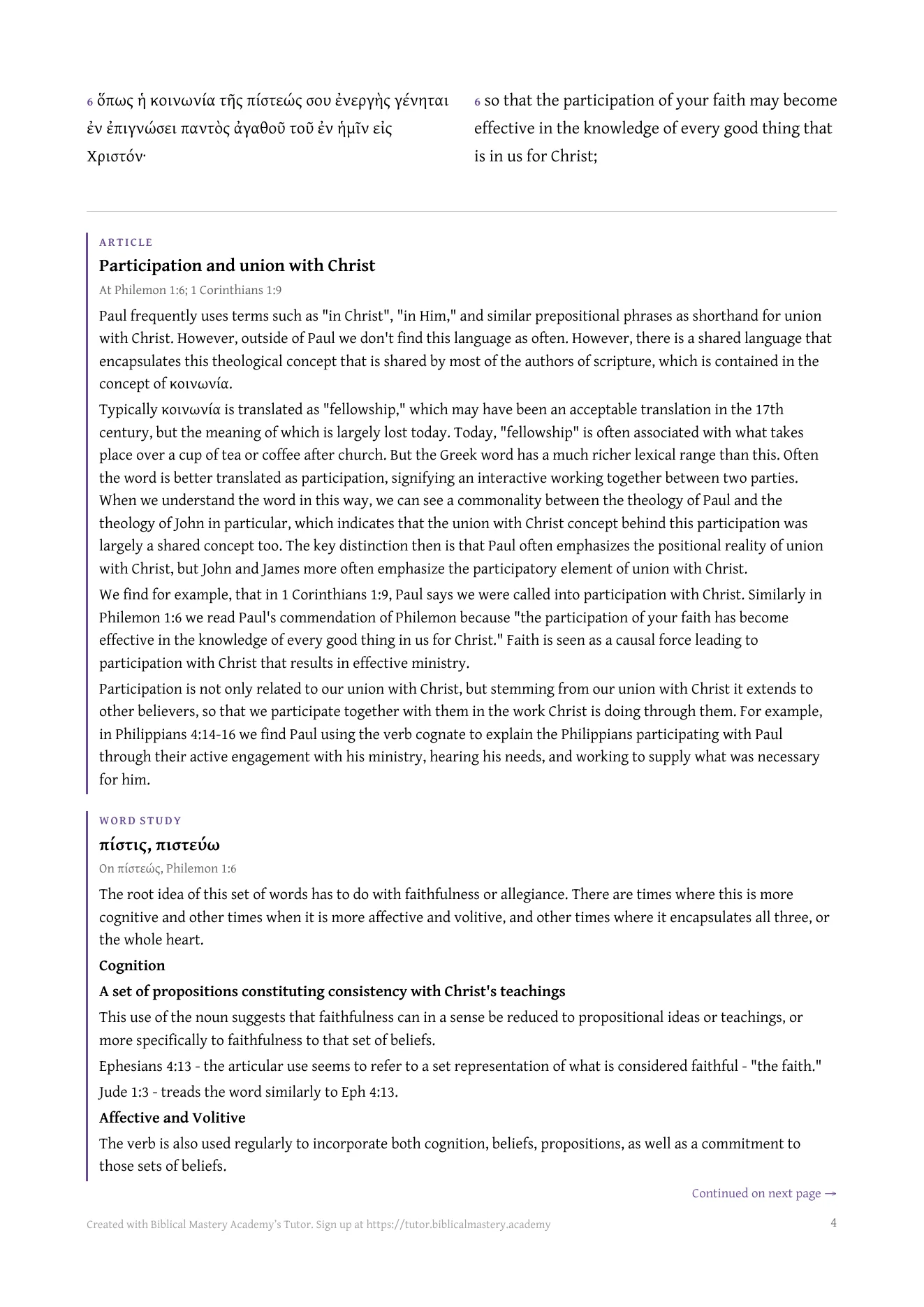
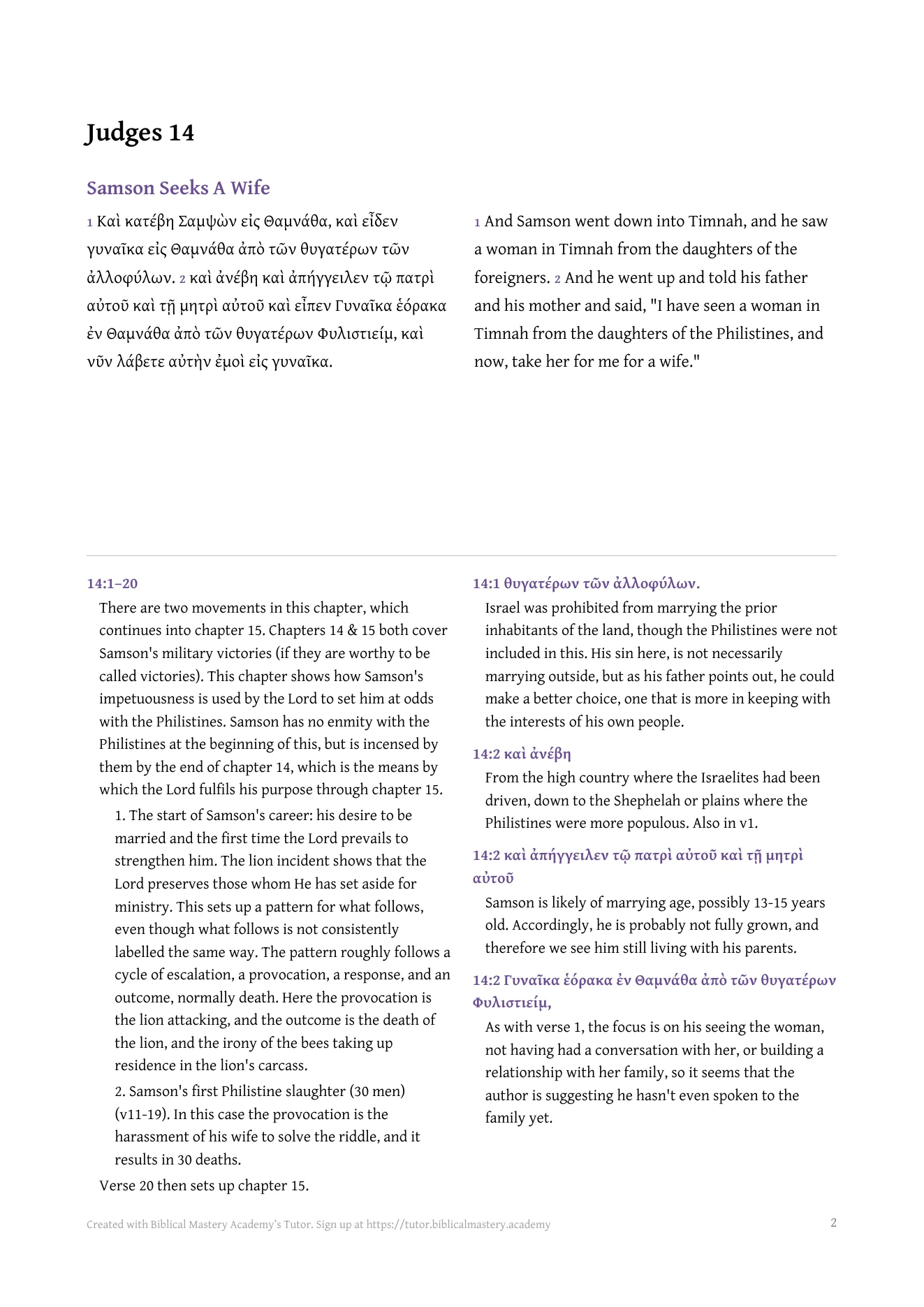
Two exports from my own study Bible in Tutor, just as they come out of the Bible reader. Philemon is a whole book: introduction, outline, my translation beside the Greek, notes, two word studies and an article. Judges 14 is a chapter of the Septuagint with a heavier set of notes and cross-references.
Every member who reads in Tutor builds a study Bible as they go. These two are mine. They are works in progress, as a study Bible should be, but they show what a few weeks of careful reading leaves behind when you write down what you notice.
Philemon
Philemon is short enough to finish, so this one is complete. It opens with a book introduction (the big idea, author, date and setting, audience, purpose, themes and key passages) and an outline built from my own section headings. Then comes the Greek text with my translation beside it, verse by verse, and my notes underneath.
It also shows the two longer kinds of writing the reader keeps. A word study is written once about a word and appears wherever that word occurs, so the study on πίστις and πιστεύω, which also appears in Romans 12 and Ephesians 4, prints here under Philemon 6. An article is a longer piece placed at the passages it discusses. This one, on κοινωνία as participation rather than mere fellowship, sits at Philemon 6 and 1 Corinthians 1:9.
Judges 14
Judges 14 is from the Septuagint, the Greek Old Testament, which comes with Greek Tutor and every Greek membership. It has more notes than Philemon, along with cross-references across Judges, and in places it sets the Greek beside the Hebrew where the two differ.
How a study Bible like this gets made
You read a chapter in Tutor’s Bible reader. It glosses only the words you haven’t learned yet, so you can keep your attention on what the text says. When something catches your eye, you write it down: a note on the word, the verse or the passage. You translate the verse as you go, with a footnote where English cannot carry everything the Greek does. When a word keeps turning up, you start a word study and add to it each time you meet the word again. When a theme runs across several passages, you write an article and place it at each one.
None of that happens in an afternoon. It happens one chapter at a time, and after a while you have a study Bible built from your own work in the text. When you want it on paper, you export it.